By Vikas Sharma
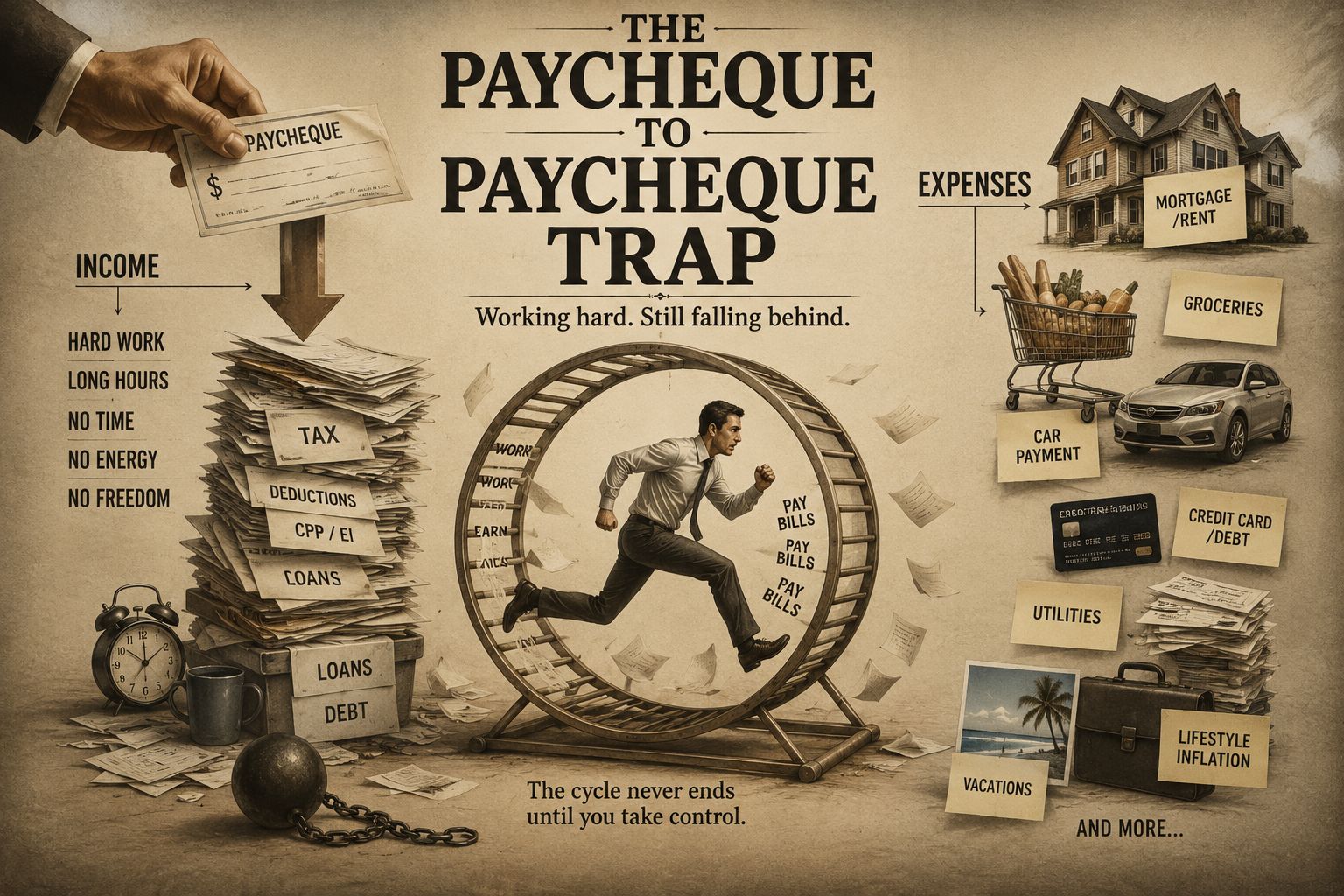
The Paycheque-to-Paycheque Trap
Living paycheque to paycheque does not mean you are poor.
It means your income arrives and immediately leaves.
- There is little room for error.
- Little room for opportunity.
- Little room for wealth creation.
One unexpected expense can create financial stress.
A person earning $50,000 can live paycheque to paycheque.
A person earning $250,000 can live paycheque to paycheque.
The issue is often not income alone. The issue is the relationship between income, spending, debt, and financial behavior.
Why Does It Happen?
1. Mindset
Many people focus on earning money but never learn how money works. Income becomes the goal. Financial freedom never becomes the objective.
2. Misunderstanding Money
People understand earning. Fewer understand cash flow, compounding, inflation, debt, taxation, and risk. Money follows rules whether we understand them or not.
3. Habits
Small daily decisions repeated for years create financial outcomes. Wealth is usually built through habits. Financial stress is often built the same way.
4. Social Affirmation
Many purchases are not made for utility. They are made for approval.
The car.
The house.
The vacation.
The brand.
Sometimes people are buying validation rather than value.
5. Class Expectations
Every income level comes with social pressure. People often spend according to the class they want to appear in rather than the financial reality they live in.
6. Ego
Ego can be expensive. Refusing advice. Ignoring numbers. Competing with others. Believing appearances matter more than financial security.
7. Irresponsibility
Some financial problems are not economic problems. They are behavioral problems. Ignoring budgets. Avoiding financial planning. Taking debt without understanding consequences.
8. Lifestyle Inflation
Income increases. Expenses increase faster. The promotion arrives. The savings never do.
9. Easy Credit
Modern society makes spending easy and saving difficult. Credit cards. Lines of credit. Buy-now-pay-later programs. Tomorrow's income is often spent today.
10. Lack of Long-Term Thinking
Many people plan for the weekend. Few plan for retirement. The future eventually arrives whether we prepared for it or not.
The Real Question
The paycheque-to-paycheque problem is rarely about a single decision. It is usually the result of thousands of decisions, beliefs, habits, influences, and financial misunderstandings compounded over time.
The question is not: "How much money do you make?"
The better question is:
"How much of your financial life would survive if the next paycheque didn't arrive?"
That answer reveals more about financial health than income ever will.
Vikas Sharma
Mortgage Mentor + Broker + Author
Founder, Dream Home + Life & Indibrick