By Mudit Chhura, Co-Founder of Indibrick
The numbers are in, and they indicate a systemic failure in the Ontario housing supply chain. In January, there were only 246 new construction homes sold in the Greater Toronto Area (GTA). To put that catastrophic data point into perspective, this is the lowest volume of new home sales recorded since 1981. This represents a 45-year low, despite the fact that the GTA’s population has more than doubled in that same timeframe.
How did we arrive at a supply deficit more severe than the 1990 real estate disaster? While macroeconomic factors like Bank of Canada interest rates play a role, the root cause is deeply structural. As a data-driven PropTech platform, Indibrick.ca analyzes the variables causing this friction. At the center of this architectural collapse is the Ontario Greenbelt and the artificial scarcity it creates.
The High-Rise Dependency Variable
To understand the current paralysis, we must look at the historical data. Over the past eight years, approximately 80% of all new home sales in the GTA have been high-rise condominiums. The region has engineered a housing ecosystem entirely dependent on vertical density.
When high-rise development halts—due to skyrocketing financing costs, inflated construction materials, and a pullback from pre-construction condo investors—new home construction effectively stops. The system has no fallback mechanism because low-rise alternatives have been legislated out of financial viability.
The Greenbelt: An Artificial Moat Around the GTA
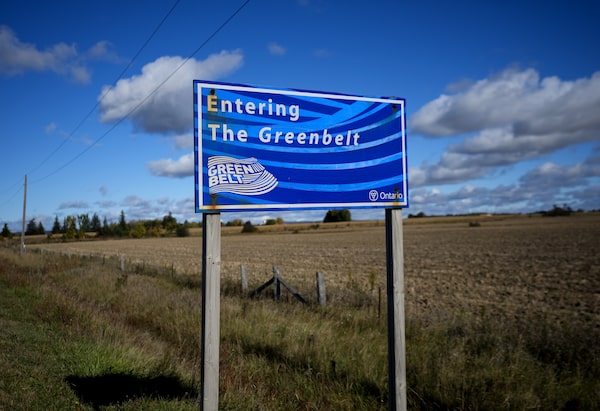
In software development, an artificial constraint limits the output of an entire system. In GTA real estate, the Ontario Greenbelt acts as that regulatory constraint. Originally designed to protect agricultural and environmentally sensitive lands, its economic byproduct has been the creation of an artificial moat around the Greater Toronto and Hamilton Area (GTHA).
1. The Mechanics of Artificial Land Scarcity
By strictly capping the outward expansion of developable land, the Greenbelt drastically limits the supply of plots available for single-family homes, semi-detached houses, and townhomes. Basic economic algorithms dictate that when demand scales (via record immigration and population growth) but supply is artificially capped, prices hyper-inflate. The cost of acquiring developable land has reached levels where builders mathematically cannot construct low-rise housing that the average Canadian family can afford.
2. The "Missing Middle" Crisis
Because the Greenbelt makes horizontal expansion prohibitively expensive, developers are forced to build vertically. This wipes out the "missing middle"—affordable townhomes and mid-rise structures. If a developer acquires a multi-million dollar parcel of land within the Greenbelt constraints, the only way to achieve a viable Return on Investment (ROI) is to build a massive luxury high-rise.
The Friction Costs: Bureaucracy and Development Fees
The Greenbelt’s land scarcity is compounded by a severely bloated bureaucratic pipeline. Building a home in Ontario currently requires navigating a gauntlet of friction costs:
- Insanely High Development Fees: Municipalities, restricted from expanding their tax bases outward, have drastically increased development charges on new builds, adding tens of thousands of dollars to the final price of a pre-construction home.
- Paralyzing Approval Timelines: The timeline from land acquisition to breaking ground is measured in years, not months. Capital is tied up in endless zoning amendments and municipal reviews.
- Redundant Reporting: For new subdivisions, developers are often required to submit 21 to 22 different, highly complex environmental, traffic, and shadow reports before even applying for a building permit.
Forecast: When Will New Construction Recover?
Based on our current data modeling, the GTA new construction market will not recover this year, and it is highly unlikely to normalize next year. The roadblocks—artificial land scarcity caused by the Greenbelt, exorbitant municipal fees, and regulatory bloat—are hardcoded into the current provincial framework. Until these systemic issues are patched with aggressive pro-development legislation, supply will remain constrained.
Navigate the Constrained Market with Indibrick
In a market defined by low inventory and high friction, buyers and investors need a technical advantage. You cannot rely on traditional, manual searches when supply is at a 45-year low.
At Indibrick.ca, we’ve engineered a vertically integrated lead generation and market intelligence platform. Whether you are searching for exclusive pre-construction condo allocations or looking to secure the lowest possible mortgage rate by scanning 40+ lenders in 90 seconds, our ecosystem provides the data you need to execute your real estate strategy.
Stop navigating a broken system manually. Leverage the technology of Indibrick.ca to find your next property and secure your financing today.