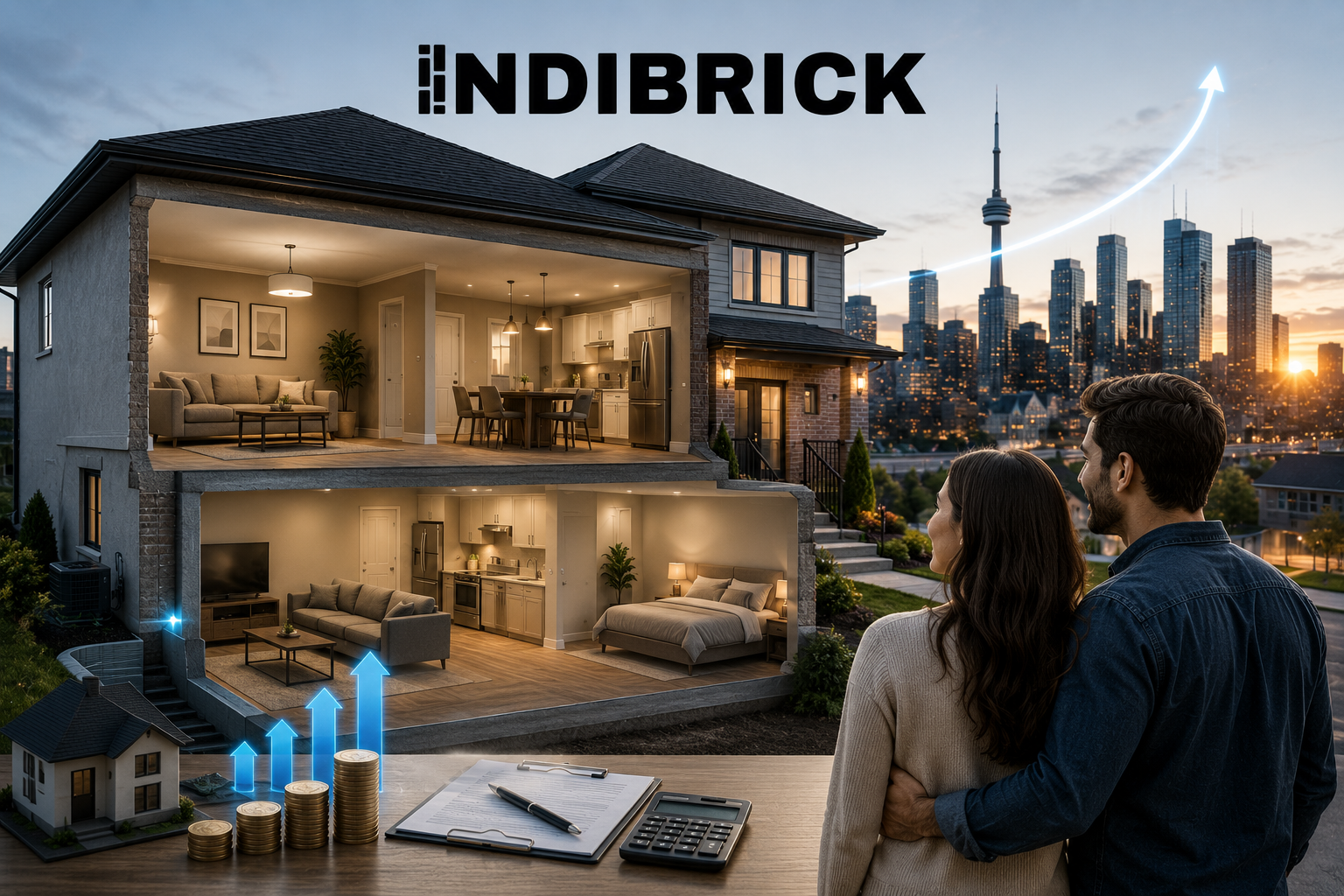
For many first-time home buyers in the Greater Toronto Area (GTA), achieving a mortgage pre-approval that matches today’s housing prices feels like an uphill battle. With rigorous stress tests and elevated interest rates, relying solely on your T4 income might limit your purchasing power. But what if your future home could help pay for itself?
Welcome to the ultimate real estate strategy for modern Canadian buyers: House Hacking. By strategically purchasing a property with a legal basement apartment or a secondary rental suite, you can legally use projected rental income to drastically boost your mortgage qualifying amount.
What is House Hacking in Ontario?
House hacking is an investment strategy where you live in one portion of your property while renting out the other units to generate income. In the GTA, this most commonly takes the form of buying a detached or semi-detached home with a finished, separate-entrance basement.
The financial engineering behind this is powerful. Through the IndiBrick platform, we capture prospective buyers in the early "Dreaming" phase of their property search[cite: 1]. By exploring active listings, users can utilize our "Can I Afford This?" widget to see exactly how rental offsets change their financial reality[cite: 1].
The Math: How Rental Income Supercharges Pre-Approvals
When you apply for a mortgage, lenders look at your Gross Debt Service (GDS) and Total Debt Service (TDS) ratios. When you purchase a property with a rental unit, Canadian lenders will typically allow you to add a percentage of the projected rental income (often 50% to 100%, depending on the lender's specific policies and whether the suite is legal) directly to your qualifying income.
A Real-World GTA Example:
- Your Base Household Income: $120,000
- Standard Max Pre-Approval (Approx): $480,000 to $500,000
- Projected Basement Rental Income: $1,800/month ($21,600/year)
By presenting a structured application to the right lender, that rental income can push your total qualifying income significantly higher, bridging the gap between a standard condo and a freehold asset.
Frequently Asked Questions
Do I need to be a landlord before applying?
No. If the property you are purchasing already has a tenanted suite, or if we can obtain a market rent appraisal (Schedule A) for the vacant unit, many lenders will accept this projected income upfront for your pre-approval.
Does the basement apartment have to be strictly "legal"?
This depends on the lender. "A-Lenders" (major banks) usually require the suite to be retrofitted and registered as a legal secondary dwelling. However, the IndiBrick ecosystem includes access to "Alternative" or B-Lenders who take a more common-sense approach and may accept income from non-conforming, "in-law" suites, provided they meet safety standards.
How does IndiBrick help me execute this strategy?
IndiBrick acts as your complete vertical integration partner. We operate a highly efficient lead arbitrage model: we acquire property data and pair it with institutional-grade financial calculators[cite: 1]. You can browse homes, run the basement rental numbers through our integrated mortgage widgets, and seamlessly transition into a pre-approval workflow with our licensed mortgage brokers[cite: 1].
Stop Renting. Start Engineering Your Wealth.
Don't let high interest rates keep you out of the market. Let our proprietary algorithms and expert brokers build your custom house-hacking strategy today.
Calculate Your House Hacking Pre-Approval