How Canada’s AI Data Centre Boom Could Hit Your Wallet: Ontario Electricity, Tech Prices, Home Values and Mortgage Impact (2026)
IndiBrick Editorial
IndiBrick Financial
By Mudit Chhura | Co-Founder, IndiBrick | Read Time: 10 Mins
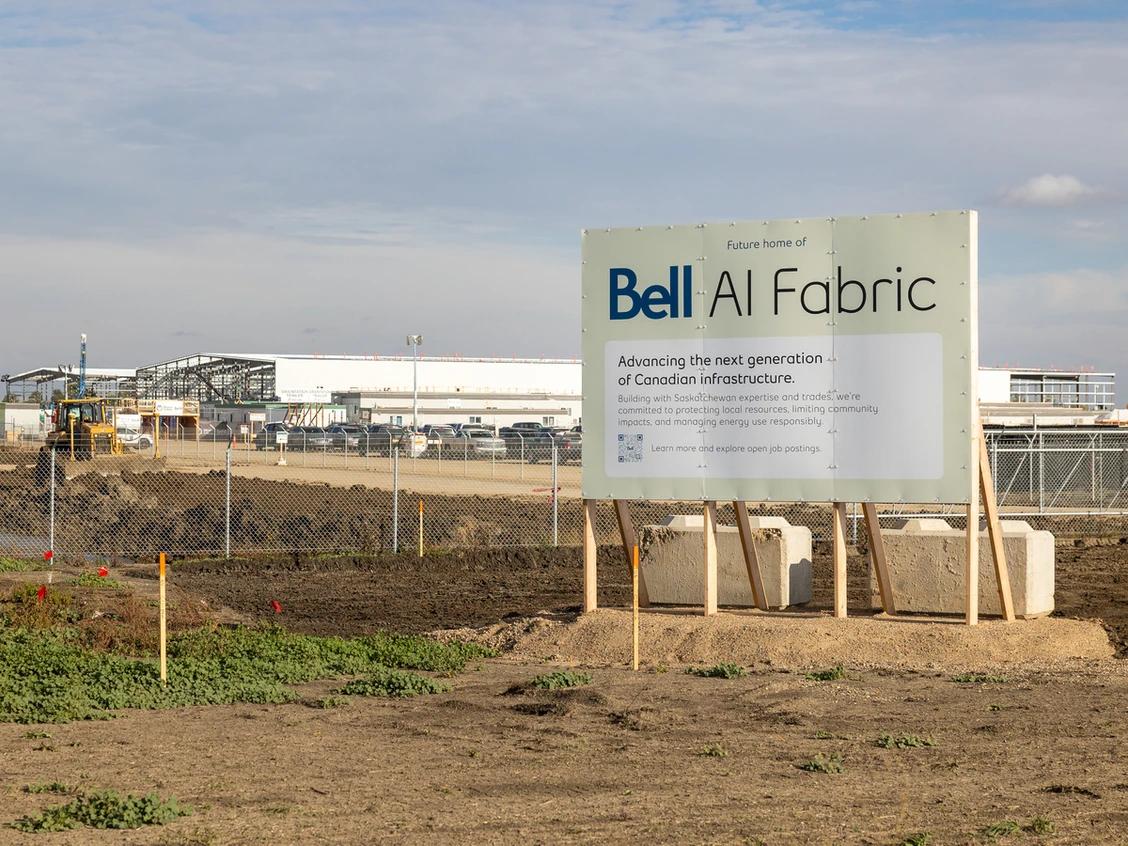
Canada is in the middle of an artificial intelligence data centre boom. Tens of billions of dollars are scheduled to be spent on the massive, power-hungry buildings that train and run AI, and Ontario, with its nuclear-heavy grid and its fibre-rich Greater Toronto Area, is one of the places the industry wants to build. Supporters see jobs, investment and tax revenue. Critics see higher electricity demand, water use, noise and pressure on neighbourhoods.
For ordinary households, the real question is simpler: will the data centre boom help or hurt my wallet? This guide covers what the boom means for the prices of everyday tech, for Ontario electricity bills, for the communities where these projects are proposed, and for anyone buying a home, renewing a mortgage or investing in Ontario real estate.
You can check your affordability with our free calculator at any point while you read.
Quick Answer: Will Canada's AI Data Centre Boom Raise Costs for Ontario Households?
It can in two ways. First, the global race for AI hardware has created a chip and memory crunch that is pushing up prices for computers, phones and appliances, with analysts expecting it to continue into 2027 and beyond. Second, data centres need enormous amounts of electricity. Ontario's grid operator has about 7,000 megawatts of data centre connection requests pending, and the province says new data centres will have to pay their own energy costs and will not receive cash incentives, so that households are not left subsidizing them. How well that promise holds up will matter to every Ontario electricity bill.
What Is an AI Data Centre and Why Is Canada Building So Many?
A data centre is a facility full of servers, networking gear and cooling systems that stores and processes data. Data centres built for artificial intelligence are a different scale from the traditional kind. They are typically much larger and need far more land, energy, water and specialized computer chips.
To see how big the trend has become, look at the largest AI facility under construction anywhere. Colossus 2, being built by Elon Musk's X.AI, is reported to use about 550,000 Nvidia chips and to draw roughly 946 megawatts of power, enough for up to one million homes, and it is still growing. Canada's projects are smaller, but the direction is the same: more computing, more power, more land.
How the Data Centre Boom Hits Your Wallet Today: Higher Tech Prices
The first impact is already showing up at the checkout. The global rush to buy AI chips has created a supply crunch for the conventional chips used in everyday consumer products. That has pushed up costs for computers, mobile phones and household appliances, and analysts expect the pressure to continue in 2027 and beyond.
- Phones: Apple recently raised iPhone prices by US$100
- Computers: research firm Gartner expects PC prices to jump about 17 percent this year
- Smartphones: Gartner expects smartphone prices to rise about 13 percent
- Memory chips: some memory component prices have risen 300 to 400 percent, according to Kevin Jia of Toronto-based custom computer builder Quoted Technology, with retailers either passing along the cost or trimming specifications to hold the sticker price
Jia's summary is the one to remember: "Your dollar doesn't go as far." For a household furnishing a new home, replacing a laptop for work or upgrading a home office, these increases add up. They also feed into overall inflation, which is one of the things the Bank of Canada watches when it decides on interest rates.
Ontario Data Centre Projects: Where the Boom Is Landing
Ontario already hosts major cloud infrastructure, and more is planned. The projects below are the ones most relevant to GTA homeowners and buyers.
| Project or Development | Location | What Has Been Reported |
|---|---|---|
| Microsoft Ontario investment | Vaughan, Markham and Etobicoke area | A "multi-billion-dollar" Ontario investment, with an estimated combined demand of about 200 MW across three sites and about 250 permanent jobs once operating |
| Microsoft Vaughan complex | Vaughan | Expected to use about 730 million litres of municipal water a year, according to reporting on the project |
| Proposed hyperscale data centre | Tenth Line West and Argentia Road, Mississauga | Planned at 50 to 100 MW, less than 300 metres from a residential neighbourhood, and reported as a Prologis proposal still under city review |
| Proposed Armour Township project | Armour Township, Ontario | Cancelled in June 2026 after public opposition |
Project details change quickly, so treat these as a snapshot of recent reporting rather than a final list.
Ontario's Grid: Can Ontario Power the AI Boom?
Data centres run around the clock, which makes them very different from most electricity users. Ontario's Independent Electricity System Operator (IESO) reports about 7,000 megawatts of data centre connection requests pending, double the amount reported in March. For perspective, that is more than a quarter of Ontario's peak demand of roughly 25,000 megawatts. Most of those projects are early stage and many will not proceed, but the numbers show how much the industry wants to build here.
- Data centres are expected to make up about 13 percent of new electricity demand in Ontario by 2035
- Ontario's overall electricity demand was forecast in 2024 to grow about 75 percent by 2050
- Most of Ontario's power comes from low-emission sources such as nuclear and hydro, but natural gas plants usually fill gaps at peak times, so round-the-clock data centre demand could mean more gas in the short term
- The province's approach encourages large users to bring their own power supply, which could include on-site generation
Ontario's Data Centre Playbook: Who Pays?
In August 2026, Premier Doug Ford unveiled the province's data centre framework, often called the "data centre playbook." Its core promise is that data centres will cover their own costs.
- New data centres must pay all of their energy costs and must not pass them on to local ratepayers
- Large data centres would be placed in a new rate class and pay more for electricity than other large industrial users, with the higher rate reported to apply to facilities above about 1 MW
- No cash incentives, only non-financial support such as help with permits
- Projects must reduce environmental impact, for example with closed-loop cooling that recycles water
- Approval would go only to projects that deliver local benefits such as investments in roads, parks and community centres
- Legislation passed last year lets the energy minister prioritize or reject grid connection requests from large data centres, and approvals can take up to three years
Economic Development Minister Vic Fedeli has said data centre companies must pay a premium power rate or generate their own electricity. The public consultation on the playbook has closed, and legislation could be tabled in the fall session.
See What You Could Qualify For Today
Run your numbers against current rules and rates in a few minutes, free and with no obligation.
Check Your AffordabilityLocal Pushback: Mississauga, Oakville and the Moratorium Debate
While the province says "full steam ahead," several Ontario municipalities are hitting the brakes.
- Oakville became the first Ontario municipality to approve a one-year pause on new data centre development, on August 11, 2026
- Mississauga council voted unanimously to direct staff to draft an interim control bylaw that would pause large-scale data centre development for up to one year, with a possible one-year extension. The final bylaw vote was scheduled for September 16, 2026, and interim control bylaws can be appealed to the Ontario Land Tribunal
- Sault Ste. Marie also moved to pause new projects
- Hamilton voted down a pause by a narrow margin, and Burlington declined a moratorium but ordered a policy review
- The Association of Municipalities of Ontario has asked the province to prioritize projects that offer community benefits and to make sure data centres do not drain power needed for other priorities
Residents raise three recurring concerns: noise and heat from large facilities, heavy water use, and the possibility that new demand is met with gas-fired power. Mississauga's mayor has also pointed to the other side of the ledger, which is lost property tax revenue and business activity if projects are blocked. The Premier has called local moratoriums "NIMBYism," so the fight between the province and cities is likely to continue.
What the Data Centre Boom Means for Ontario Real Estate and Mortgages
Home values near data centres
There is not yet reliable Ontario data showing how a nearby data centre affects the value of a house. Buyers and sellers tend to focus on the same practical factors: distance from the site, noise, visual impact, truck traffic and whether the project is approved or still being fought. If you are buying near a proposed site, ask your realtor and lawyer to check the zoning status and any pending applications, and treat it like any other neighbourhood risk.
Industrial land and employment lands
Data centres compete for the same large industrial and employment-zoned sites used for warehouses, logistics and manufacturing. Developers have paid premiums for large sites in the GTA, and power availability is becoming as important as location. For investors in industrial and commercial property, that shifts where value and risk sit across Peel, York, Halton and Toronto.
Municipal budgets and property taxes
Large data centres can add significant assessment value for a municipality. That is part of why some city leaders worry about turning projects away, and why others want community benefit agreements before approving anything. Over time, the balance between new tax revenue and new infrastructure costs can influence local property tax pressure.
Household budgets and mortgage qualification
Higher prices for electronics, and possible electricity rate changes if the province's protections fall short, would be another squeeze on monthly cash flow. That matters for mortgage qualification, since lenders look closely at your income, debts and the stress test rate rather than hoping budgets will stay flat. Higher inflation can also keep the Bank of Canada cautious about cutting rates, which affects renewal and variable rate decisions.
Check Today's Lowest Rates
Compare current fixed and variable options before you decide.
View Today's RatesWho Benefits and Who Pays? A Quick Summary
| Group | Possible Upside | Possible Downside |
|---|---|---|
| Ontario households | Possible jobs and investment, plus new tax revenue to host communities | Higher prices for computers and phones, and a risk of electricity cost pressure if protections fall short |
| Homeowners near proposed sites | Local benefit agreements and community investment | Noise, heat, traffic, and uncertainty about neighbourhood impact |
| Municipalities | Property tax assessment growth | Infrastructure strain, water use, and approval disputes with the province |
| Real estate investors | Demand for industrial land and power-ready sites | Competition for sites and higher construction costs |
| Tech and skilled trades workers | Construction work and permanent technical jobs | Permanent job counts are often small compared with the size of the investment |
Five Practical Steps for Ontario Buyers, Owners and Investors
- Know your real budget. Use the affordability calculator and include higher everyday costs for electronics and utilities.
- Research the neighbourhood. Check zoning, pending applications and city council decisions before you buy near employment lands.
- Get pre-approved and hold your rate. This protects you if rates move while you shop.
- Stress test your own budget. Make sure you could handle a higher payment at renewal and still cover rising living costs.
- Work with one coordinated team. Your mortgage advisor, realtor and lawyer should be on the same plan, which is how we work at IndiBrick.
Frequently Asked Questions About Data Centres in Ontario
What is an AI data centre?
An AI data centre is a large facility filled with servers and specialized chips that train and run artificial intelligence systems. These facilities are typically much larger than traditional data centres and need more land, electricity, water and equipment.
Will the data centre boom raise my electricity bill in Ontario?
The Ontario government says no. Its framework requires new data centres to pay all of their own energy costs, with a new higher rate class for large facilities, so costs are not passed on to other ratepayers. Whether that holds in practice will depend on the final rules and how the grid handles the new demand.
How much electricity could Ontario data centres use?
Ontario's grid operator has about 7,000 megawatts of data centre connection requests pending, more than a quarter of the province's roughly 25,000 megawatt peak demand. Most are early stage, and data centres are expected to account for about 13 percent of new electricity demand by 2035.
Why are computer and phone prices going up?
The global race to build AI data centres has created a supply crunch for chips and memory used in consumer electronics. Gartner expects PC prices to rise about 17 percent and smartphone prices about 13 percent this year, and some memory component prices have jumped 300 to 400 percent.
Where are the major data centre projects in Ontario?
Reported projects include Microsoft facilities in the Vaughan, Markham and Etobicoke area and a proposed hyperscale data centre at Tenth Line West and Argentia Road in Mississauga. A project in Armour Township was cancelled in June 2026 after public opposition.
Which Ontario cities have paused data centres?
Oakville approved a one-year pause on August 11, 2026. Mississauga council voted unanimously to pursue an interim control bylaw pausing large-scale data centres, with a final vote scheduled for September 16, 2026. Sault Ste. Marie also moved to pause projects, while Hamilton and Burlington declined moratoriums.
Do data centres lower nearby home values?
There is no reliable Ontario data yet. Buyers usually weigh noise, distance, traffic and whether a project is approved or contested. If you are buying near a proposed site, have your lawyer and realtor check zoning and any pending applications.
How many jobs do data centres create in Ontario?
Construction can employ many workers for a limited time, but permanent roles are usually few relative to the investment. Reporting on Microsoft's Ontario plans has pointed to roughly 250 permanent jobs once operating, alongside construction employment.
Could the data centre boom affect mortgage rates?
Indirectly. Higher prices for electronics add to inflation, and inflation influences Bank of Canada rate decisions. It is one factor among many, so the best protection is a pre-approval with a rate hold and a budget that can handle higher payments.
Should I use a mortgage broker when buying near an area with development pressure?
A broker can compare multiple lenders, help you hold a rate, and structure financing if your situation does not fit a single bank's approval box. Speak with an IndiBrick advisor for a clear picture of your options.
The Bottom Line
Canada's AI data centre boom is a genuine economic opportunity, and Ontario is positioning itself to host a large share of it. But the benefits are not guaranteed to land evenly. Households are already paying more for tech, cities are pushing back on the speed of approvals, and the province is promising that data centres will pay their own way on electricity.
For buyers, owners and investors, the most useful move is to replace guesses with numbers: find out what you can afford, check today's rates, and talk to a team that works together from mortgage to realtor to lawyer.
Make Your Next Move With Real Numbers
Buying, renewing or refinancing, get clear advice from one coordinated team.
Speak to an Advisor Try the Calculator View Today's RatesSources: Financial Post (Yvonne Lau, Oct 15, 2026); IESO figures and Ontario data centre framework as reported by BNN Bloomberg, Global News, CP24, The Narwhal and Dentons; Mississauga reporting from Global News and ConnectCRE; Microsoft Ontario reporting from DCD. Project details and policy proposals change quickly. Rates and program details are subject to change and qualification. This article is general information and not financial, tax, legal or investment advice.
Mortgage Payment Scenarios
Model your monthly payments at different rates.
1. Purchase Details
2. Mortgage Details
3. Property & Closing
Your Monthly Payment
$3,251
Monthly Breakdown (Est)
Stress Test Qualification
To qualify for this mortgage at the 6.29% stress test benchmark, you will need an approximate household income of $140,358 / year.
About the author
IndiBrick Editorial
IndiBrick Editorial Team
Written and fact-checked by the IndiBrick editorial team. Mortgages are brokered through Pineapple Financial Inc. (FSRA #12830).
Related analysis
Mortgage
Did Canada Really Dodge a Housing Meltdown? What the 20% Price Drop Means for GTA Buyers, Renewals and Self-Employed Borrowers (2026)

Mortgage
Is Now the Best Time to Buy Your First Home in the GTA? A Guide for First-Time Buyers and Newcomers to Canada (2026)

Mortgage
Fixed vs Variable Mortgage Rates in Canada: Will the Bank of Canada Raise Rates? (October 2026)
Ready to act?
Turn this insight into a funded deal.
Book Call