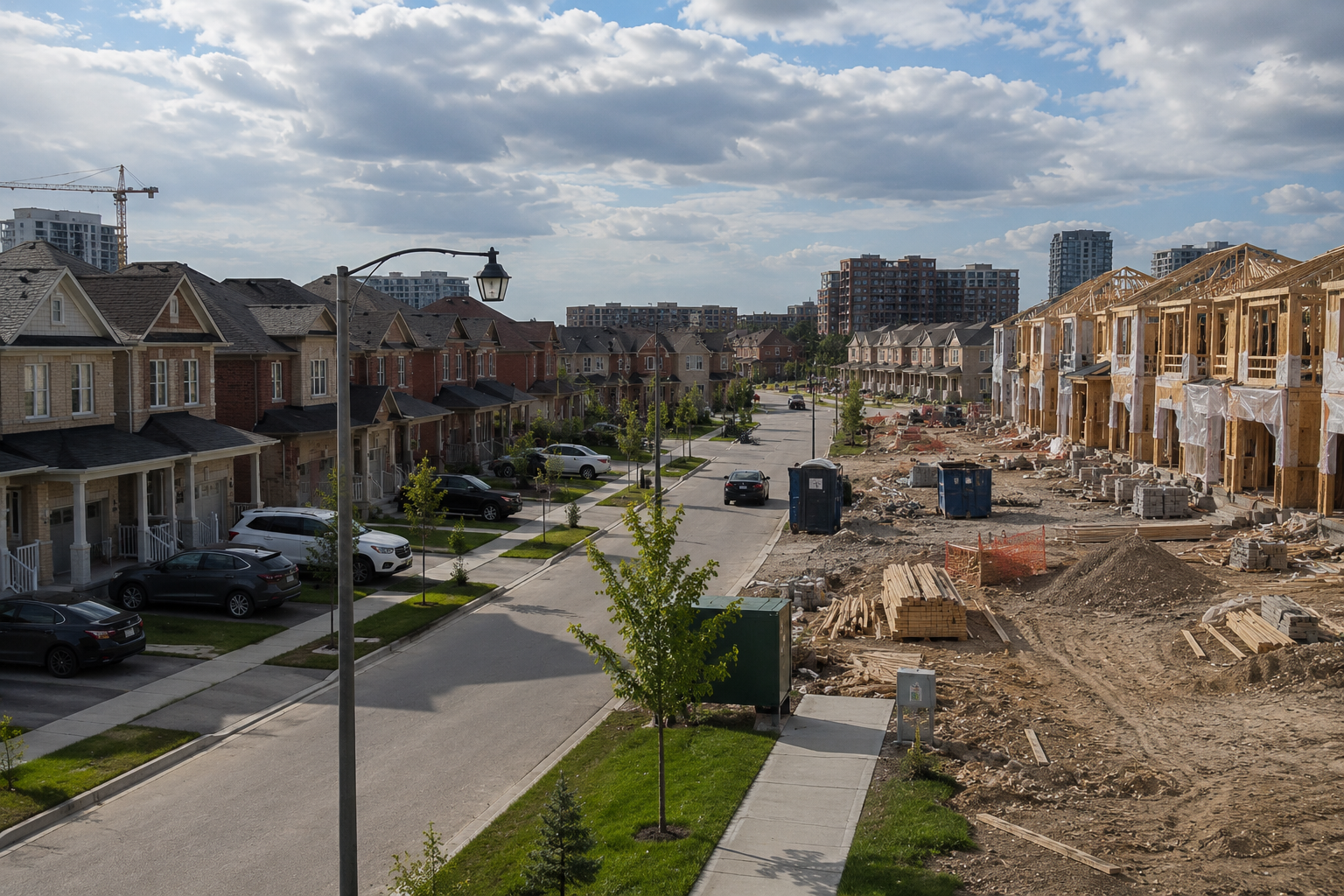
Brampton set a target of 113,000 new homes by 2031. To hit that number, the city needs to break ground on roughly 11,300 units every single year. Last year, it didn't even manage half of that.
This isn't a minor miss. It's the continuation of a three-year decline that started the moment Ontario's Bill 23 reshaped the province's housing playbook, and it's happening while Brampton's population is on track to more than double by 2051. For homebuyers, investors, and anyone with a mortgage renewal on the horizon, a widening gap between housing supply and population growth is not background noise. It's the single biggest long-term price driver in this market.
Here's a complete breakdown of how far behind Brampton actually is, why development charge cuts may not be the fix city hall is hoping for, and what this supply squeeze means for your next move in the GTA housing market.
The Numbers: How Far Behind Is Brampton, Really?
The decline in Brampton's housing starts since Bill 23 was introduced in late 2022 is stark:
- 2023: 7,028 units broken ground — already short of the 11,300 annual target
- 2024: 5,791 units — a further drop
- 2025: Just 4,759 units — less than half of what's required to stay on pace
GTA-wide new home sales sank to their lowest level since 1980 last year, with only around 5,500 total new home sales recorded across the entire region, according to developer data presented to Brampton council. Industry voices aren't calling this a slowdown anymore. They're calling it a collapse.
Meanwhile, Brampton's population is projected to grow from roughly 400,000 residents in 2006 to more than 1 million by 2051. Peel's centralized housing wait list already had over 32,000 households on it as of the last count, and the region reports higher-than-average rates of core housing need compared to the rest of Ontario.
Why Development Charges Became the Center of the Debate
Development charges (DCs) are the fees builders pay municipalities to cover the infrastructure costs of new growth — roads, water mains, sewers, community centres. In Peel, those charges can add as much as $154,000 to the price of a single detached home, a cost that typically gets passed straight to the buyer.
Under provincial pressure, the Region of Peel cut DCs by 50% in mid-2025. The results have been mixed at best: less than a year later, the region was forced to pause hundreds of millions of dollars in planned water and wastewater infrastructure projects to avoid saddling residents with steep utility rate hikes, pending financial support from other levels of government.
Brampton is now weighing a similar move. City council has floated a 30% DC reduction, with room to go to 50% if the province backfills the lost revenue. The federal and provincial governments have jointly committed $8.8 billion toward a Development Charge Reduction Program to support exactly this kind of cut across Ontario municipalities — but only for cities that commit to 30-50% reductions for at least three years.
The open question nobody has fully answered: when developer costs drop, does that saving get passed to the homebuyer, or does it simply widen developer margins? Even some Brampton councillors have publicly questioned whether residents will ever see the benefit.
Why Developers Are Still Pulling Back
Cutting fees alone hasn't been enough to restart construction. Housing industry advocates point to a deeper problem: even where projects get approved, many aren't getting built because the units coming to market don't match what buyers can actually afford. Condos are being approved, but affordability — not just approvals — is the real bottleneck.
Developers are openly acknowledging they're building some projects at break-even or worse, chasing margins in the low single digits that wouldn't have justified a project a decade ago. That's a structural signal, not a temporary dip: when the people building homes can't make the math work, supply doesn't recover just because red tape gets trimmed.
The Indibrick Verdict: What This Means for Your Strategy
Here's the reality underneath the political back-and-forth over development charges: Brampton is adding people far faster than it's adding homes, and that gap has been widening for three straight years. Structural undersupply, sustained over multiple years, is one of the most reliable long-term drivers of home price appreciation — regardless of what happens with rates in any given quarter.
For buyers sitting on the sidelines waiting for a "crash" in Brampton, the housing starts data tells a different story. A market that is chronically under-built relative to population growth doesn't correct downward in the long run — it compresses affordability further once demand catches back up to today's thin supply pipeline.
For investors, the DC reduction program and the federal HST rebate on new builds are creating a narrow window where land and pre-construction opportunities can be structured more efficiently than they could two years ago — if you have the right financing partner who understands how to route a deal through the right lender.
At Indibrick, we're already advising clients to lock in pre-approvals and structure their financing now, ahead of the next leg of this supply-demand imbalance, rather than reacting once prices move.
Frequently Asked Questions
Why are Brampton's housing starts falling behind target?
Brampton set a goal of 113,000 new homes by 2031 under provincial housing legislation, requiring roughly 11,300 units built per year. Since 2023, actual construction has fallen well short of that number each year, driven by high development charges, rising infrastructure costs, thin developer margins, and a broader slowdown in GTA new home sales.
Will cutting development charges lower home prices in Brampton?
It's not guaranteed. Peel Region cut development charges by 50% in 2025, but the savings are not required to be passed on to buyers, and the region has since had to pause major infrastructure projects due to funding shortfalls. Whether Brampton's proposed cut lowers prices will depend on how much of that saving developers choose to pass along.
What does falling housing supply mean for home prices in the GTA?
When housing construction consistently falls behind population growth, it typically puts long-term upward pressure on home prices, even during periods of slower sales activity. Brampton's population is projected to more than double by 2051, while housing starts have declined for three consecutive years, widening the supply-demand gap.
Is now a good time to buy in Brampton given the housing shortfall?
With new home sales at multi-decade lows and construction activity depressed, some buyers may find more negotiating room and incentives in today's market than they will once supply tightens further. Getting pre-approved and understanding lender options now can position buyers to move quickly when better opportunities appear.
How can I take advantage of the current pre-construction incentives in Ontario?
Combining the federal HST rebate on new homes with regional development charge reductions can materially change the economics of a pre-construction purchase. An experienced mortgage advisor can help structure financing to make the most of these overlapping incentives before eligibility windows close.
Don't Wait for the Supply Gap to Close
Brampton's housing shortfall isn't resolving itself overnight. If you're planning to buy, invest, or refinance in the GTA, the smartest move is to have your financing structured before the market catches up to today's undersupply.
Book a Strategy Call with the Indibrick TeamFree • No Obligation