Stated Income Mortgages for Self-Employed Business Owners: How Insured BFS Programs Actually Work
IndiBrick Editorial
IndiBrick Financial
By Mudit Chhura | Co-Founder, IndiBrick | Read Time: 6 Mins
Self-employed borrowers are often told they need two full years of tax returns and a perfectly averaged income before they can qualify for a mortgage. That is not entirely true. Insured stated income programs exist specifically for business owners whose income does not fit a traditional T4 mold, and they can offer some of the most competitive terms available in the self-employed mortgage space.
Here is a clear breakdown of how one such insured stated income Business-for-Self program works, so you know exactly what to expect before you apply.
What This Program Is For
This is an insured and insurable-only stated income mortgage designed for sole proprietors and incorporated business owners. It covers standard purchases, port and replacement transactions, and purchase plus improvements, on properties with 1 to 4 units that are owner occupied or partially owner occupied.
| Feature | Detail |
|---|---|
| Term Options | 5 year fixed closed or 5 year variable closed |
| Maximum LTV | 90%, with borrower-paid premium between 65.01% and 90% |
| Loan Amount | $50,000 minimum, up to $1,349,999.99 |
| Amortization | 5 to 25 years, up to 30 years for insured purchases over 80% LTV meeting eligibility criteria |
| Down Payment | Minimum 5% from own resources, remainder may be gifted from immediate family |
Stated income does not mean no verification. It means your income is assessed the way self-employed income actually works, through your business documentation, not a rigid payroll formula.
Credit and Rate Requirements
Standard rates apply on this program, with no rate premium for choosing the stated income path. Qualification is based on whichever is greater between the contract rate plus 2 percent, or the Bank of Canada 5 year benchmark rate.
- Minimum Beacon score of 650 for each applicant, with at least one borrower at 680 or higher for LTVs at or below 80%
- Minimum 2 trade lines with at least 2 years of history
- No mortgage, installment, or revolving credit delinquencies in the past 12 months
- No reported mortgage default in the last 7 years, and no previous bankruptcy
- No judgments or unpaid collections in the past 12 months
Wondering If You Qualify?
See your estimated affordability across stated income and traditional mortgage options in minutes.
Check Your AffordabilityIncome Eligibility and Documentation
This program is limited to sole proprietors and incorporated business owners with a minimum of 2 years in business, where the borrower is the primary owner. Commission-based income is not eligible under this program, and there must be no income tax arrears outstanding.
The application must include the nature of the business, years in operation, ownership structure and percentage owned, number of employees, business address, Line 150 income from the most recent Notice of Assessment, stated gross revenue, and a brief description of how the business generates income.
- Most recent Notice of Assessment confirming no tax arrears
- Sole proprietors and partnerships: business licence where applicable, plus accountant-prepared T1 Generals and Statement of Business Activities for the last 2 years
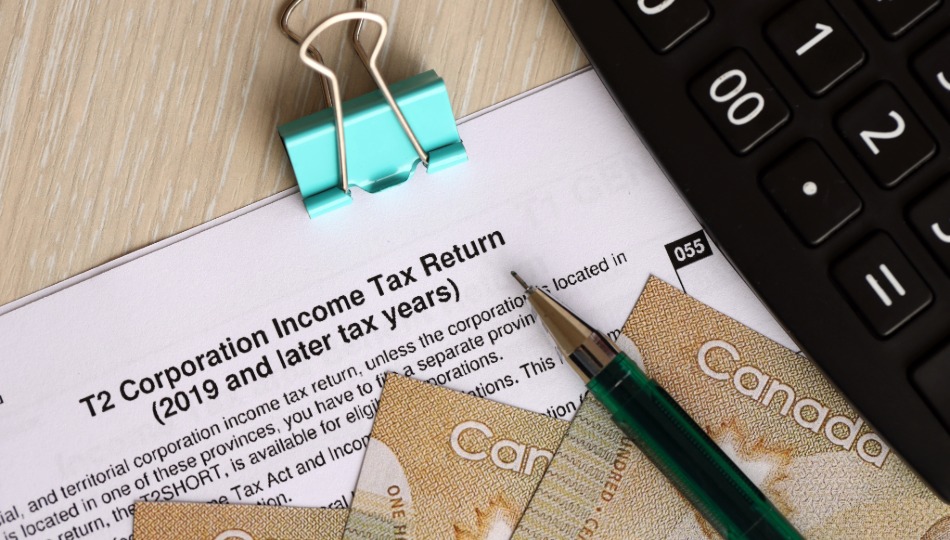
- Corporations: Articles of Incorporation supported by either audited financial statements or accountant-prepared T2 corporate tax returns for the last 2 years
- Documentation must clearly identify the borrower as the primary business owner, and additional support may be requested to confirm income sustainability
Frequently Asked Questions
What is a stated income mortgage?
A stated income mortgage allows self-employed borrowers to qualify using declared income supported by business documentation, such as tax filings and incorporation records, rather than relying solely on T4 or payroll-based verification.
Who qualifies for an insured stated income program?
Sole proprietors and incorporated business owners with a minimum of 2 years in business, strong credit, and no recent delinquencies or income tax arrears typically qualify, provided they are the primary owner of the business and reside in the property being financed.
Do stated income mortgages have higher rates?
Not necessarily. Some insured stated income programs apply standard market rates with no rate premium, though a borrower-paid insurance premium may apply depending on the final loan-to-value ratio.
The Bottom Line
If you are self-employed with at least two years in business and solid credit, an insured stated income program can offer a genuine path to standard rates and competitive terms, without forcing your income into a payroll-shaped box. Getting your documentation organized ahead of time is the biggest factor in a smooth approval.
See If You Qualify
Get matched with the right stated income or traditional mortgage option for your business.
Book a Free Strategy Call Try the CalculatorMaximum Affordability Engine
Stress-test your income against 2026 banking rules.
Buying Power Engine
Compare what the bank will lend vs. what your budget allows.
Annual Income (Gross)
Monthly Outflows
Max Bank Qualification
$564,419
"Sleep Well" Budget
$676,557
About the author
IndiBrick Editorial
IndiBrick Editorial Team
Written and fact-checked by the IndiBrick editorial team. Mortgages are brokered through Pineapple Financial Inc. (FSRA #12830).
Related analysis

Mortgage
Bank of Canada Warns Tariffs Could Slash Q4 Growth in Half, And Toronto Delinquencies Are Already Rising
Mortgage
Odds of a December Bank of Canada Rate Hike Are Rising, Here's Why

Mortgage
US Escalates Canada Trade War With New Bans and Tariffs: What It Means for GTA Buyers and Self-Employed Borrowers
Ready to act?
Turn this insight into a funded deal.
Book Call