Bank of Canada Raises Interest Rate to 2.5% Today (October 28, 2026): What It Means for Your Mortgage and Where to Find the Lowest Rates
IndiBrick Editorial
IndiBrick Financial
By Mudit Chhura | Co-Founder, IndiBrick | Read Time: 8 Mins
Updated October 28, 2026, following the Bank of Canada announcement
The Bank of Canada raised its overnight policy rate by 0.25 percentage points to 2.5 percent on October 28, 2026. It is the first rate hike since July 2023, and the Bank says more increases could be needed. If you have a variable-rate mortgage, are about to renew, or are searching for the lowest mortgage rates in Canada today, this guide explains what the announcement means and what to do next.
You can see today's lowest mortgage rates or run your payment with our free affordability calculator at any point while you read.
Quick Answer: What Did the Bank of Canada Announce Today?
The Bank of Canada raised its policy rate from 2.25 percent to 2.5 percent on October 28, 2026, the first increase since July 2023. The Bank Rate is now 2.75 percent and the deposit rate is 2.45 percent. Lenders' prime rate is rising from 4.45 percent to 4.70 percent, so variable-rate mortgage and HELOC payments will increase. Fixed mortgage rates are not set by the Bank of Canada but follow bond yields. The next announcement is December 9, 2026.
See Today's Lowest Mortgage Rates
Rates move after announcements. Compare current fixed and variable options and hold a rate before they change again.
View Today's RatesBank of Canada Interest Rate Announcement October 28, 2026: Key Facts
| Item | Details |
|---|---|
| Policy rate (overnight rate target) | Raised 0.25 points to 2.5% from 2.25% |
| Bank Rate | 2.75% |
| Deposit rate | 2.45% |
| Lenders' prime rate | 4.70%, up from 4.45% |
| Last rate hike before today | July 2023 |
| Inflation (CPI) | Around 3% since April, projected to reach about 3.5% by year-end |
| CPI excluding gasoline (September) | 2.2% |
| Q2 2026 GDP growth | 3.3%, with Q3 tracking near 2% |
| 2026 GDP growth forecast | About 1% |
| Unemployment rate | Around 6.5% |
| Next Bank of Canada announcement | December 9, 2026 |
Source: Bank of Canada announcement and reporting from BNN Bloomberg and MPA. Lenders set their own prime rates, so confirm yours with your lender.
Why Did the Bank of Canada Raise Interest Rates Today?
The Bank said inflation is higher and more persistent than it projected in July, driven mainly by high oil and energy prices linked to the Middle East conflict. The goal of the hike is to reduce the risk that energy costs spread into the prices of other goods and services.
- Inflation: CPI has been around 3 percent since April and is expected to approach 3.5 percent by the end of the year, with a return to 2 percent not expected until mid-2028
- Growth: the Canadian economy grew 3.3 percent in the second quarter and is tracking about 2 percent in the third, stronger than expected despite U.S. tariffs
- Jobs: unemployment has been around 6.5 percent for several months, with some slack remaining
- Uncertainty: the Bank cited Middle East developments, Canada-U.S. trade relations and how businesses pass on higher costs
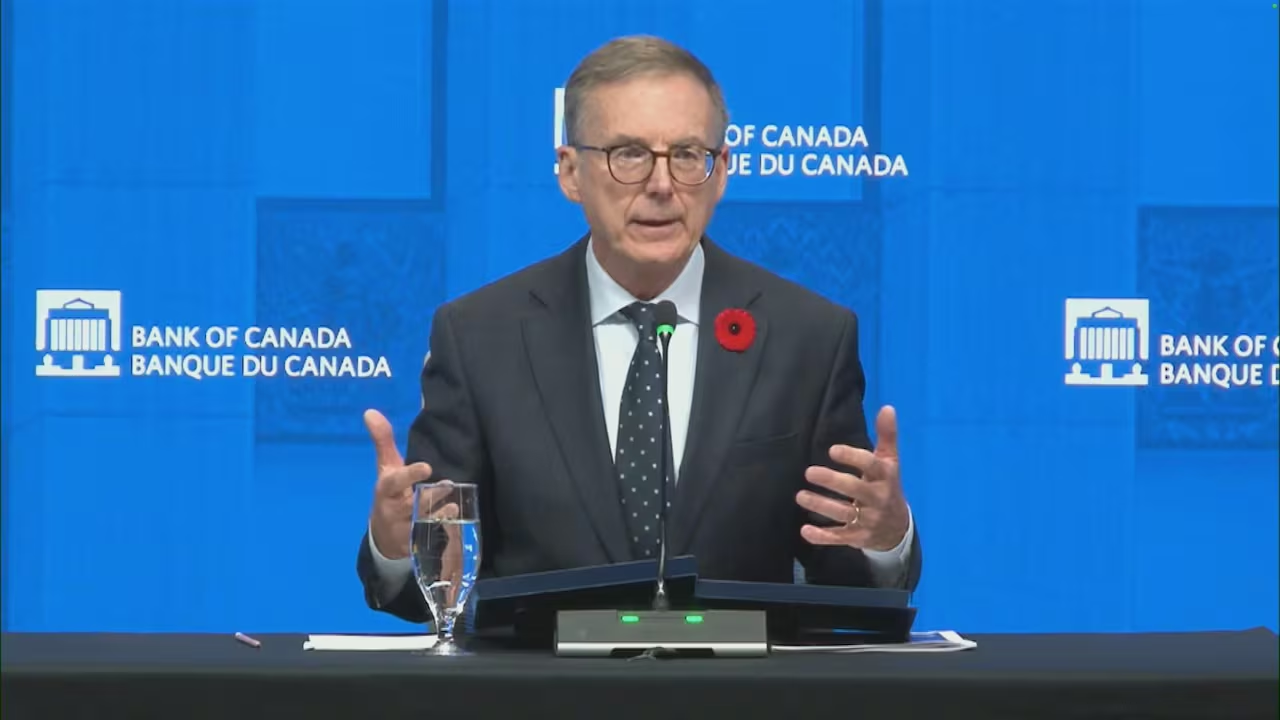
Governor Tiff Macklem said the Bank will decide one meeting at a time, but that "there could be a need to raise the policy rate further." Not every economist agreed with the hike. Some argued that core inflation near 2 percent supported patience.
Not Sure What This Means for Your Mortgage?
Speak with an IndiBrick advisor for a clear, no-pressure review of your options.
Speak to an AdvisorWhat the Rate Increase Means for Your Mortgage
Variable and adjustable-rate mortgages
Variable mortgage rates move with lenders' prime rate, which is rising by 0.25 points to 4.70 percent. If you have a variable rate, your rate goes up immediately. Whether your payment changes right away depends on your mortgage type: adjustable-rate mortgages change the payment, while fixed-payment variable mortgages change the split between interest and principal.
To give you an idea of the dollar impact, here is an illustration of a 0.25 point increase on a 25-year amortization, using a rate of 3.50 percent rising to 3.75 percent.
| Mortgage Balance | Approximate Monthly Payment Increase |
|---|---|
| $300,000 | About $40 |
| $500,000 | About $66 |
| $700,000 | About $93 |
| $900,000 | About $120 |
These are illustrative estimates only. Your exact change depends on your rate, amortization and lender.
Fixed-rate mortgages
If you are in a fixed-rate mortgage, your rate and payment do not change until renewal. Fixed rates are not set by the Bank of Canada. They follow Government of Canada bond yields, which can move before and after an announcement. That is why fixed rates can rise or fall even when the policy rate does not change.
Home equity lines of credit (HELOCs)
HELOCs are typically priced off prime, so the rate on your line of credit rises with it.
Compare Fixed and Variable Side by Side
See current options, then run the payment on your own mortgage with our calculator.
View Today's Rates Try the CalculatorWill Mortgage Rates Keep Going Up? What Happens Next
Nobody can say for certain, but the Bank has given a clear signal. It said more increases could be needed and that it will proceed carefully. It also says CPI inflation should remain elevated through 2027, averaging about 3 percent, before easing.
| Scenario | What Would Drive It | Likely Effect on Mortgage Rates |
|---|---|---|
| More hikes | Energy prices stay high and inflation spreads to other prices | Variable rates keep rising, and fixed rates may follow bond yields higher |
| A pause | Energy prices ease and core inflation stays near 2% | Variable rates stabilize at the new level |
| Weaker economy | New U.S. tariffs and trade uncertainty weigh on growth | Pressure to hold rates steady, and fixed rates could ease |
The next decision is on December 9, 2026. There is no Monetary Policy Report at that meeting.
How to Find the Lowest Mortgage Rates After a Rate Hike
Lenders reprice after announcements, and the gap between the best rate and your bank's offer can be large. Here is how to find the lowest mortgage rates available to you.
- Check live rates. Start with our mortgage rates page, which is updated as the market moves.
- Compare more than one lender. A broker can shop multiple lenders instead of relying on a single bank's offer.
- Hold your rate. A rate hold protects you for a set period while you shop or plan your renewal, subject to lender terms.
- Know your budget. Use the affordability calculator and stress test a higher payment.
- Ask about your situation. Speak with an IndiBrick advisor if you are self-employed, new to Canada, an investor, or renewing soon.
Want Today's Best Rate for Your Situation?
Our team compares multiple lenders, holds your rate, and walks you through your options with no pressure. You can speak with an IndiBrick advisor today.
What the Rate Hike Means for Different Borrowers
If you are a first-time homebuyer or new to Canada
Get pre-approved and hold your rate before you start shopping, so a higher rate does not surprise you. Know your full costs, including closing costs, and check which first-time buyer programs you qualify for.
If you are renewing your mortgage
Start early. Compare lenders instead of accepting your bank's first offer, and stress test your budget for a higher payment.
If you have a variable-rate mortgage
Review your payment and talk to an advisor about your options. Some lenders allow switching to a fixed rate, but terms and penalties vary, so get advice before you act.
If you are self-employed or an investor
A broker can access lenders that assess income through bank statements and business documents, and can structure financing for rental and commercial properties.
Frequently Asked Questions About Today's Bank of Canada Rate Announcement
What did the Bank of Canada announce today?
On October 28, 2026, the Bank of Canada raised its policy rate by 0.25 percentage points to 2.5 percent, the first increase since July 2023. The Bank Rate is 2.75 percent and the deposit rate is 2.45 percent.
What is the Bank of Canada interest rate now?
The Bank of Canada policy rate is 2.5 percent as of October 28, 2026.
Why did the Bank of Canada raise rates?
The Bank said inflation is higher and more persistent than expected because of high energy prices, and it wants to prevent those costs from spreading to other prices. It also cited stronger-than-expected growth.
What is the new prime rate in Canada?
Lenders' prime rate is rising from 4.45 percent to 4.70 percent following the 0.25 point increase. Each lender sets its own prime rate, so confirm yours with your lender.
Will my variable mortgage payment go up?
Your variable rate will rise with prime. Adjustable-rate mortgages will see payments increase, while fixed-payment variable mortgages may see more of your payment go to interest. As an illustration, a 0.25 point increase adds about $66 per month on a $500,000 mortgage over a 25-year amortization.
Will my fixed mortgage rate change?
Not until renewal. A fixed rate stays the same for the full term. New fixed rates follow Government of Canada bond yields rather than the policy rate directly.
Will the Bank of Canada raise rates again?
The Bank said "there could be a need to raise the policy rate further," but that it will decide one meeting at a time. The next announcement is December 9, 2026.
Should I lock in a fixed rate now?
It depends on your budget, timeline and risk tolerance. Fixed rates offer certainty, while variable rates could rise further if the Bank hikes again. An advisor can compare both for your situation.
Where can I find the lowest mortgage rates in Canada today?
Rates differ by lender, term, down payment and borrower profile. A broker can compare multiple lenders for you, and you can start with the current rates on our mortgage rates page.
What happens to HELOC rates after the hike?
HELOCs are typically priced off prime, so the rate on your line of credit rises with the increase in prime.
What is a mortgage rate hold?
A rate hold lets you lock in a quoted rate for a set period while you shop for a home or plan a renewal, subject to lender terms and qualification.
How can I get a mortgage pre-approval?
A mortgage advisor reviews your income, debts, credit and down payment, then confirms how much you may qualify for and holds a rate. You can speak with an IndiBrick advisor to get started.
The Bottom Line
The Bank of Canada has raised rates for the first time since 2023, and it has not ruled out more. For borrowers, the most useful response is practical: check live rates, know what a higher payment would mean for your budget, and hold a rate if you are buying or renewing soon.
Replace guesses with numbers: check today's lowest rates, find out what you can afford, and talk to an advisor before you decide.
Get Ahead of the Next Rate Move
Buying, renewing or refinancing, get clear advice and today's best options from one coordinated team.
Speak to an Advisor Try the Calculator View Today's RatesSources: Bank of Canada announcement of October 28, 2026; BNN Bloomberg and MPA reporting. Payment figures are illustrative estimates. Rates and program details are subject to change and qualification. This article is general information and not financial, tax or legal advice.
Mortgage Payment Scenarios
Model your monthly payments at different rates.
1. Purchase Details
2. Mortgage Details
3. Property & Closing
Your Monthly Payment
$3,251
Monthly Breakdown (Est)
Stress Test Qualification
To qualify for this mortgage at the 6.29% stress test benchmark, you will need an approximate household income of $140,358 / year.
About the author
IndiBrick Editorial
IndiBrick Editorial Team
Written and fact-checked by the IndiBrick editorial team. Mortgages are brokered through Pineapple Financial Inc. (FSRA #12830).
Related analysis
Mortgage
Bulk Buyers Are Snapping Up 45% of New Toronto Condo Sales at 40% Discounts: What It Means for GTA Buyers, Investors and Mortgages (2026)

Mortgage
Canada’s GDP Growth Slows to 0.9%: What the PBO Forecast Means for Mortgage Rates, Renewals and Homebuyers (2026)
Mortgage
Leaky Loonie Alert: Could a Weak Canadian Dollar Push Mortgage Rates Higher? Bank of Canada Rate Predictions and Lowest Rates Today (2026)
Ready to act?
Turn this insight into a funded deal.
Book Call