Markets Rebound After U.S. Midterms: What It Means for Canadian Mortgage Rates
IndiBrick Editorial
IndiBrick Financial

By Mudit Chhura | Co-Founder, IndiBrick | Updated November 4, 2026 | Read Time: 8 Mins
Wall Street jumped and the S&P/TSX Composite Index climbed to a fresh high on November 4 after U.S. midterm election results pointed to a divided Washington, with Democrats reported to have taken control of both houses of Congress. It is a U.S. political story, but Canadians are asking a practical question: does it change mortgage rates in Canada, the Canadian dollar, or the outlook for the Bank of Canada's next rate decision?
This guide explains, without taking a political side, how a market rally and a shift in U.S. politics can (and cannot) reach your mortgage. It covers fixed vs variable rates, the Bank of Canada's December 9 decision after its October 28 rate increase, trade and tariff risk, and what buyers, renewers and self-employed borrowers can do this week.
Want your numbers while you read? Check your affordability with our free calculator or see IndiBrick's current mortgage rates.
Quick Answer: Do the U.S. Midterm Results Change Canadian Mortgage Rates?
Not directly. Canadian mortgage rates are driven mainly by Government of Canada bond yields (for fixed rates) and the Bank of Canada's policy rate (for variable rates), not by U.S. election outcomes. Analysts quoted in early coverage said the near-term policy outlook is little changed, and a divided government is often seen as market-friendly. The indirect channels to watch are trade and tariff headlines, oil prices, the Canadian dollar and bond yields. The Bank of Canada raised its policy rate to 2.5 percent on October 28, and its next decision is December 9, so lock decisions in the coming weeks should be based on your own timeline, not on election headlines.
What Happened to Markets on November 4, 2026
According to early-trading reports from BNN Bloomberg and Global News, North American stocks rallied as investors digested the midterm results. These are early-session snapshots and will have moved since:
| Market | Early-trading move | Level |
|---|---|---|
| S&P/TSX Composite | +480.11 points | 36,012.39 |
| Dow Jones Industrial Average | +1,173.36 points | 52,960.08 |
| S&P 500 | +102.23 points | 7,671.15 |
| Nasdaq Composite | +310.72 points | 25,682.73 |
| Canadian dollar | Trading near | 71.68 US cents |
| WTI crude (December) | -US$3.11 | US$92.98 |
| Brent crude | -1.2% | US$102.35 |
| Gold | +US$107.40 | US$4,047.80 |
Analysts offered two themes. Capital Economics' Stephen Brown said little changes in the near-term policy outlook. ING's Carsten Brzeski pointed out that markets have historically tended to like a split government, while warning that a president facing a hostile Congress can sometimes turn more unpredictable on trade and foreign policy, so tariff disputes could return.
Does a U.S. Election Move Canadian Mortgage Rates?
Only through a few indirect channels. It helps to know what actually sets your rate:
- Fixed mortgage rates follow Government of Canada bond yields (especially the 5-year yield). Lenders price off bond markets, so anything that moves bond yields can eventually move fixed rates.
- Variable and adjustable rates follow each lender's prime rate, which moves with the Bank of Canada's overnight rate. A U.S. election does not change that rate by itself.
- Lender spreads and competition matter too. Two lenders can price the same bond-yield environment very differently, which is why comparing matters more than headlines.
The practical takeaway: a stock rally is not a mortgage-rate signal. Bond yields, inflation data and the Bank of Canada are. We did not see Canadian bond-yield data in the early reporting, so we are not claiming a rate move from the election. Check our rates page for the latest.
Wondering If Today's Rally Changes Your Rate?
An IndiBrick advisor can tell you in minutes whether it is worth locking, waiting or comparing options.
Talk to an Advisor See Our RatesWhy Canadian Borrowers Should Still Pay Attention
1. Tariffs and Trade Uncertainty
Canada's economy is closely tied to U.S. trade policy. Much of the pre-election commentary in Canadian media focused on whether a changed Congress would affect tariffs and the Canada-U.S. trade relationship, and economists have been split on whether it makes things better or more erratic. Nobody can say yet. What is clear is that trade headlines have repeatedly moved Canadian growth expectations, and growth expectations feed into bond yields and Bank of Canada decisions.
2. Oil and the Canadian Dollar
Oil prices eased in early trading while the loonie traded near 71.68 US cents. Energy prices have been a key driver of Canadian inflation this year. If oil falls, inflation pressure can ease. If it rebounds, the Bank of Canada may have less room to relax. A weaker dollar also makes imported goods more expensive, which can keep inflation sticky.
3. The Bank of Canada's December 9 Decision
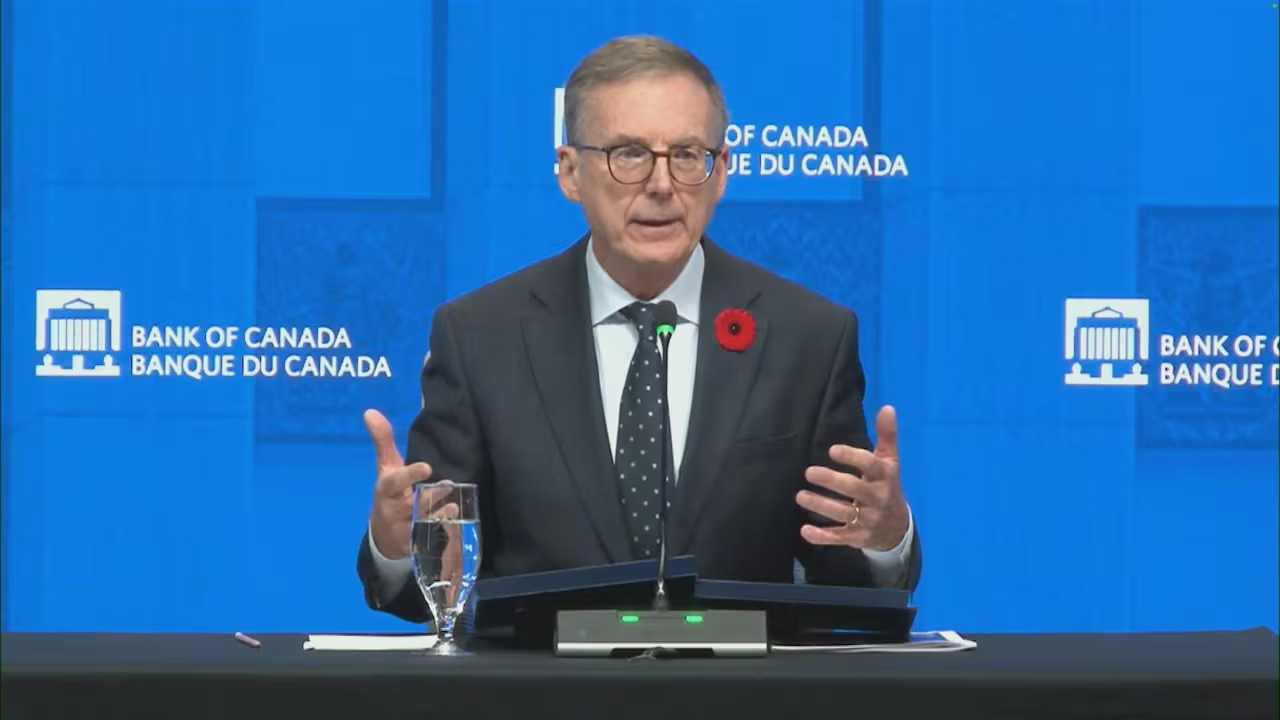
The Bank of Canada raised its overnight rate by 25 basis points to 2.5 percent on October 28, 2026. Its next scheduled announcement is December 9. Strong markets and steady risk appetite do not force the Bank's hand, but inflation, jobs and growth data over the next five weeks will. For variable-rate borrowers, every move flows through prime almost immediately. For a detailed breakdown, see our article on the October 28 rate increase.
Fixed vs Variable Mortgage: Which Makes Sense After the Election?
| Situation | May favour fixed | May favour variable |
|---|---|---|
| Your priorities | Payment certainty and budgeting | Flexibility and potential savings if rates fall |
| Risk comfort | Low tolerance for payment changes | Comfortable with payment or amortization shifts |
| Rate outlook | You expect rates to stay elevated or rise | You expect slower growth to bring cuts later |
| Time horizon | Staying in the home for the full term | Might sell or refinance before the term ends |
| Tight cash flow | Yes, predictability helps | Only with a buffer for increases |
There is no universal answer. A mortgage agent can model both against your income, term and plans so you are deciding on numbers, not headlines.
What Buyers Should Do Right Now
- Get your real budget. Use the affordability calculator to see your price range including closing costs.
- Get preapproved and hold a rate. A rate hold protects you for a period while you shop, and rates can move with bond yields.
- Stress test yourself. Check that you still qualify if rates rise another quarter point or two.
- Do not wait for a perfect headline. Elections, tariffs and central bank decisions will keep coming. A plan that works at today's rates is stronger than a plan that needs rates to fall.
What Homeowners Renewing or Refinancing Should Do
- Start 120 to 150 days before renewal. Many lenders let you secure a rate early, and you can often still switch lenders at maturity without a stress test if you are uninsured and stay within the same amortization.
- Do not auto-accept your lender's renewal letter. The first offer is often not the best available rate.
- Compare terms, not just rates. Prepayment privileges, penalties and portability can matter as much as a few basis points.
- Consider your plans. If you may move, refinance or add a rental unit, your term and product choice should reflect that.
Mortgage Renewal Coming Up?
Get a no-pressure comparison of your lender's offer against the market.
Review My Renewal Run the NumbersSelf-Employed and Commission Borrowers
Market swings and policy uncertainty can make lenders more careful, but self-employed borrowers are not shut out. Lenders look at two-year averages, notices of assessment and business stability. If your income is variable, getting your documents organized early and working with a broker who knows which lenders suit your file can make approval smoother.
What to Watch Next
| What | Why it matters for mortgages |
|---|---|
| Government of Canada 5-year bond yield | Main driver of fixed mortgage rates |
| Canadian inflation data | Shapes the Bank of Canada's next move |
| Canada-U.S. trade and tariff headlines | Affect growth, jobs and rate expectations |
| Bank of Canada decision on December 9 | Directly moves variable and prime-based rates |
| Oil prices and the Canadian dollar | Influence inflation and the interest rate outlook |
Frequently Asked Questions
Do the U.S. midterm elections affect Canadian mortgage rates?
Not directly. Canadian fixed rates follow Government of Canada bond yields and variable rates follow the Bank of Canada's policy rate. Election results can influence rates only indirectly, through trade expectations, bond yields, oil and the Canadian dollar.
Will mortgage rates go down after the midterms?
There is no evidence in early reporting of a direct move. Analysts quoted on November 4 said the near-term policy outlook was little changed. Rates will depend on bond yields, inflation and the Bank of Canada's decisions.
What is the Bank of Canada's policy rate right now?
The Bank of Canada raised its overnight rate by 25 basis points to 2.5 percent on October 28, 2026. Its next scheduled announcement is December 9, 2026.
Why did the TSX rise on November 4, 2026?
Early reports said North American markets rallied after U.S. midterm results pointed to a divided government, which investors have historically viewed as market-friendly. The S&P/TSX Composite was up about 480 points to around 36,012 in early trading.
Could U.S. tariffs on Canada change after the election?
It is uncertain. Some analysts expect little near-term change, while others warn a president facing a hostile Congress could become less predictable on trade. Tariff headlines remain a key risk for Canadian growth and rate expectations.
Should I lock a fixed rate now or wait?
It depends on your closing date, budget tolerance and risk comfort. Waiting for a specific headline is risky because rates can move either way. A rate hold lets you protect a rate while you shop, and an advisor can show you what each option costs.
Are variable mortgage rates affected by the stock market?
Not directly. Variable rates follow lender prime rates, which follow the Bank of Canada's overnight rate. Stock-market moves matter only if they change the Bank's view of inflation and growth.
Does the Canadian dollar affect my mortgage?
Indirectly. A weaker loonie raises the cost of imports and can keep inflation higher, which may limit how quickly the Bank of Canada can cut rates.
How early can I secure a mortgage rate before renewal?
Many lenders allow renewal offers or rate holds roughly 120 to 150 days before maturity. Check your lender's terms and compare against the market before accepting.
How do I find the lowest mortgage rate in Canada today?
Compare lenders for your specific file, since the best rate depends on down payment, credit, property type and term. IndiBrick shows current rates on its rates page and an advisor can match you to the right lender.
Can I get a mortgage if I am self-employed?
Yes. Lenders review your income history, tax documents and business stability. A mortgage agent can match your file to lenders that understand self-employed income.
How can IndiBrick help?
IndiBrick is a tech-first mortgage brokerage serving Vaughan, the GTA, Brampton and Niagara. We compare options across lenders, run your numbers and help you choose between fixed and variable, so you can decide with confidence.
Make Your Next Move With Real Numbers
Buying, renewing or refinancing, get clear advice and today's best options from one coordinated team.
Speak to an Advisor Try the Calculator View Today's RatesSources: Financial Post coverage of November 4, 2026 market moves; BNN Bloomberg and Global News early-trading reports; Bank of Canada announcement of October 28, 2026. Market figures are early-trading snapshots and change through the day. Analyst views are as reported and are not guarantees. This article is politically neutral and general information only, not financial, tax or legal advice. Rates and program details are subject to change and qualification.
Mortgage Payment Scenarios
Model your monthly payments at different rates.
1. Purchase Details
2. Mortgage Details
3. Property & Closing
Your Monthly Payment
$3,251
Monthly Breakdown (Est)
Stress Test Qualification
To qualify for this mortgage at the 6.29% stress test benchmark, you will need an approximate household income of $140,358 / year.
About the author
IndiBrick Editorial
IndiBrick Editorial Team
Written and fact-checked by the IndiBrick editorial team. Mortgages are brokered through Pineapple Financial Inc. (FSRA #12830).
Related analysis

Mortgage
Reverse Mortgage Canada 2026: How to Borrow Up to 55% of Your Home’s Value at 55+

Mortgage
Canada’s New Immigration Levels Plan for 2027: What It Means for Real Estate and Mortgage Rates in 2026
Mortgage
Bank of Canada Raises Interest Rate to 2.5% Today (October 28, 2026): What It Means for Your Mortgage and Where to Find the Lowest Rates
Ready to act?
Turn this insight into a funded deal.
Book Call